
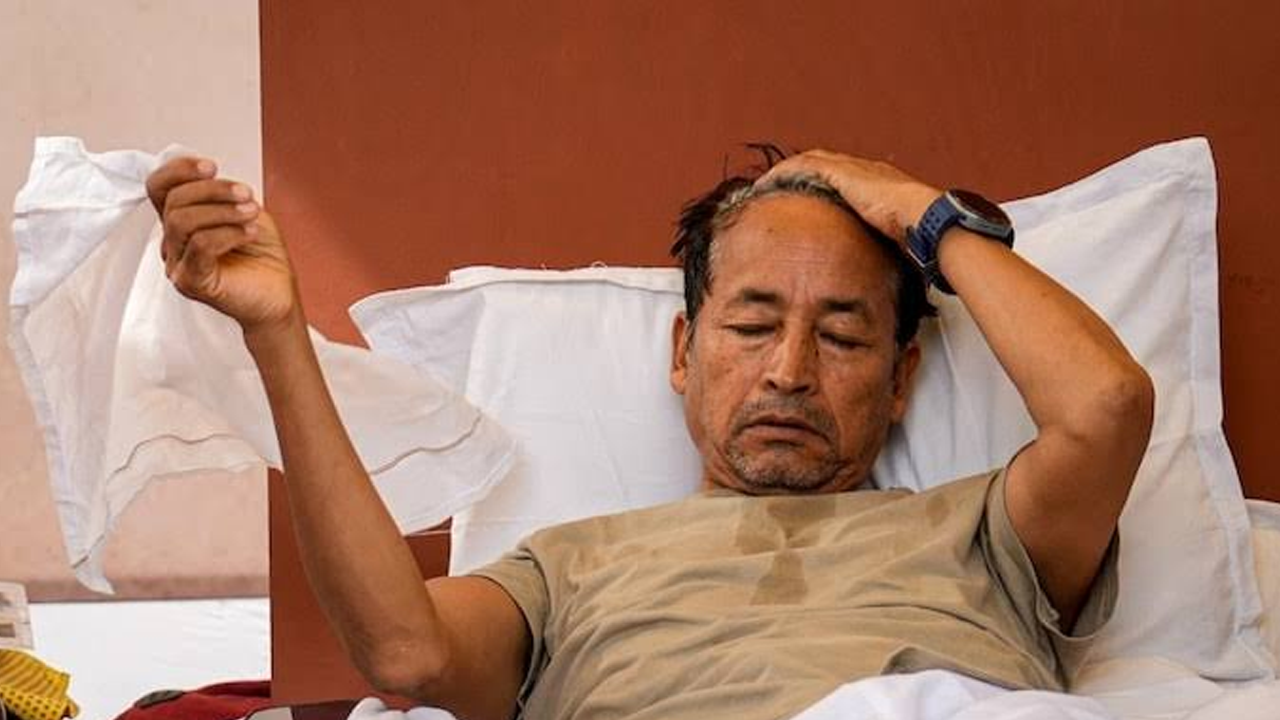
Sonam Wangchuk has been on hunger strike at Delhi’s Jantar Mantar in support with the students who were protesting against the alleged NEET-UG 2026 paper leak case. The protesters request is to make Union Education Minister Dharmendra Pradhan resign to his position and also requesting a greater accountability in India’s examination system. And its been three weeks since he started his hunger strike, and the government has not yet taken any step to consider the demands of students.
Sonam Wangchuk Protest Defies Democracy
This is not the first ever Hunger strike in Inida, Many decades ago, Bhagat Singh, Mahatma Gandhi, and countless other freedom fighters did use hunger strikes, and made British government to respond to their demands and collectively fought for the freedom of the country. The main agenda for the freedom fight was to be independent and rule our own country where we don’t have to suffer to gain justice.
Almost eight decades after Independence, the picture of yet another Indian sitting on an indefinite hunger strike, to gain justice from the country that is independent, and this situation brings up this awkward question: why hunger strikes are still showing up as a way to chase justice, even in a democratic nation?
Sonam Wangchuk’s protest has, in a way, reawakened a bigger discussion, not only about the exact issue he is raising but also about whether people today still feel cornered enough to risk their health in order to put public grievances on the map. The reasons are obviously not the same as the freedom movement, yet the approach still feels like there is a need to suffer to gain freedom and there is never unity in the country, because its always a fight to gain justice from other nations or our nation.