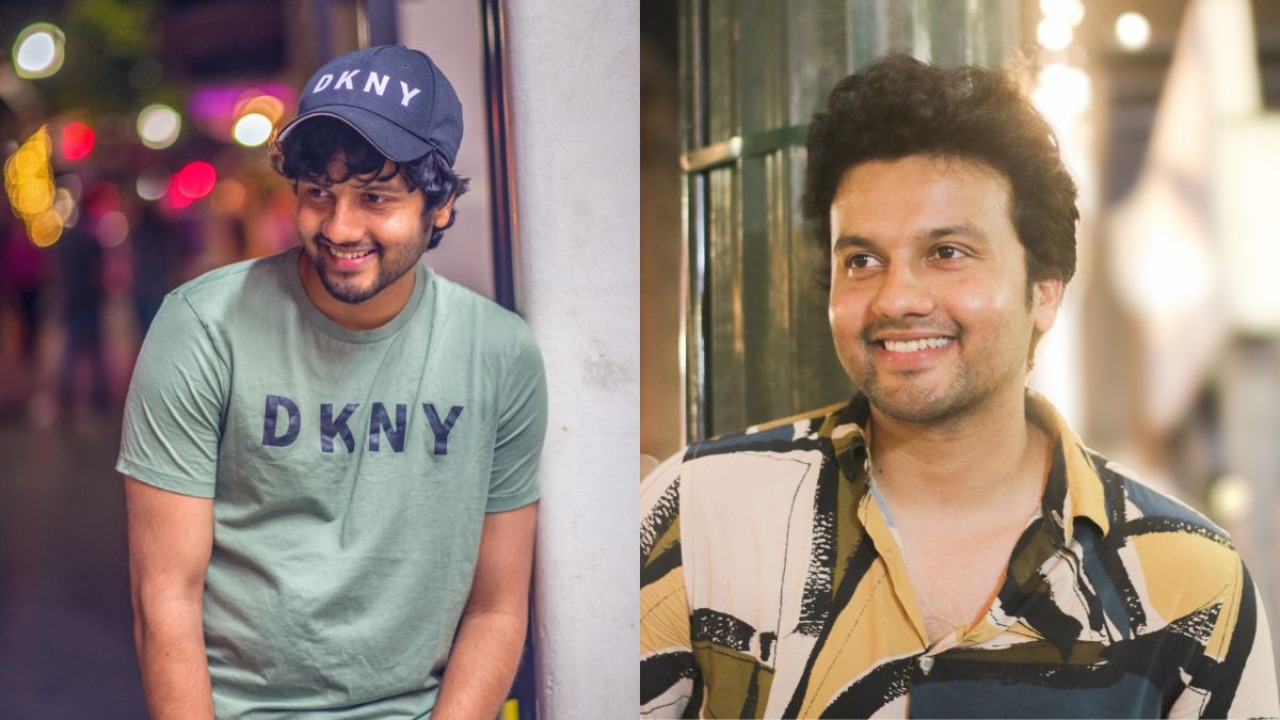
Rakesh Galebhe is an actor who has built his craft through independent cinema, moving from short films to feature projects like Gatham and Idam Jagath. In this interview, he shares insights into his journey, challenges, and evolving approach to acting.
Q. What first made you want to pursue acting, and when did it start feeling ‘real’ to you?
It all started when I began working with MR Productions. My short film “Love Logic Less” was released and received a very positive response and good buzz. That reaction gave me the motivation and confidence to seriously pursue acting. That was the moment it started feeling real to me.
Q. What are the movies and acting works you do? What made you think about acting and take steps towards it?
I have acted in close to 20 short films and four feature films to date. I have always been fascinated by cinema. Growing up, I used to tag along with my grandfather to watch films on the very first day of release. Like most people, I imagined myself in songs and scenes on screen. I strongly believe that if filmmaking or acting is truly injected into you, it never really leaves you, it keeps pulling you back.
Q. Before your first film, what kind of acting work were you doing: stage, shorts, training, or something else?
Before my first feature film, I worked extensively in short films. I acted in close to 20 short films, which helped me understand the basics of performance, camera presence, and storytelling.

Q. What was the moment you realized you had actually landed your first movie role?
At the time, I was pursuing my MBA and simultaneously making short films in the USA. I met Kiran Reddy, the director of Gatham, through his wife Divya, who was my classmate. Kiran had already directed several short films and web series. We connected instantly while discussing cinema and indie filmmaking. We shared the same vision of creating an independent feature film, and that’s how the journey began.
Q. What was the biggest challenge you faced on your journey?
The biggest challenge was making a feature film in the USA, which is not easy, especially as an independent filmmaker. Initially, it was very difficult to find the right people for each department. Over time, we managed to build a strong team. It was a great learning experience, and I truly enjoyed every part of that process.
Q. What did cinema teach you about acting that training alone couldn’t?
I am not a formally trained actor, but cinema itself has been my biggest teacher. Watching powerful performances by great actors has had a huge impact on my own work. I also closely observe people in real life, their behavior, body language, and subtle nuances, which helps me bring authenticity to my performances.
Q. Looking back now, is there anything you would approach differently in your performance?
Yes, definitely. Acting is a continuous learning process. Whenever a film is completed and released, and I watch my performance, I still feel I could have done better or taken one more take. Going forward, I want to focus more on deeply understanding the character and closely traveling with the filmmaker to explore the depth of characterization.

Q. Your film Idam Jagath had a stronger story, did that change the way you approached your role?
Yes, absolutely. Idam Jagath had many layers in its story. We did a good amount of workshops before shooting, which helped me approach the role differently. The preparation and layered narrative definitely changed my perspective and performance.
Q. How did your experience from the first movie help you on the later ones?
It helped me 100%. The experience from my first movie taught me a lot about scheduling, production challenges, teamwork, and the overall filmmaking process, which made me more confident and prepared for my later projects.
Q. Did you feel a shift in your confidence between the projects?
Yes, I definitely noticed a significant shift in my confidence as I worked on more projects. Each film taught me something new and helped me grow as an actor.
Q. Were there any specific scenes in your films that pushed you the most as an actor?
In Gatham, the climax sequence was particularly challenging, and I enjoyed every bit of performing it. In ID, there is a sequence where my character has to emote multiple expressions within 45 seconds, which was very crucial to the film. In Jagath, both the action sequences and emotional scenes pushed me the most as an actor, and I loved working on them.
Q. What are some realities of limited budget filmmaking that audiences don’t usually see?
Some realities include a limited number of working days and multitasking. In many indie projects, the cast and crew often handle multiple responsibilities. The scale of the project determines the challenges, but technical limitations and resource constraints are always present.
Q. How do you prepare for a role when time and resources are limited?
I start by thoroughly going through the script and noting down questions. I then discuss them with my director. For me, traveling with the director creatively is the most important part. Through this process, I understand the depth, nuances, and psychology of the character.
Q. Do you base your performances more on instinct or structured technique?
It depends on the role. For some characters I have played, I relied completely on instinct and became fully zoned into the character.
Q. How do you handle self-doubt in such a competitive industry?
Whenever I experience self-doubt, I focus on rehearsals and workshops. That preparation helps me gain confidence and makes it easier to deliver the performance required for the role.
Q. What kind of roles are you hoping to take on next?
Irrespective of genre, I want to be part of good films with strong characterizations. I am a fan of offbeat cinema and would love to explore diverse and challenging roles.
Q. Is there a genre you feel especially drawn to that you haven’t explored yet?
I have acted in thrillers, but I would really like to explore feel-good films. Hopefully, that happens soon.
Q. What does ‘success’ look like to you at this stage of your career?
Success can be measured in many ways. For me, it is recognition from the audience. I am still waiting for that moment, and I am committed to giving my 100% to achieve it.
Q. What advice would you give to other actors trying to break in through indie films?
I wouldn’t give advice, but I would encourage them to make short films whether or not they receive funding. Just start creating and keep going.
Q. Rakesh Galebhe, are you working on any upcoming movies or web content?
Gatham 2 is under post production and releasing soon.