
Scientists have found insanely hot water sitting way down beneath the Atlantic Ocean, like trapped in there, and it seems to come with a whole hidden setting that could mess with what we think we know about life on Earth and maybe beyond too.
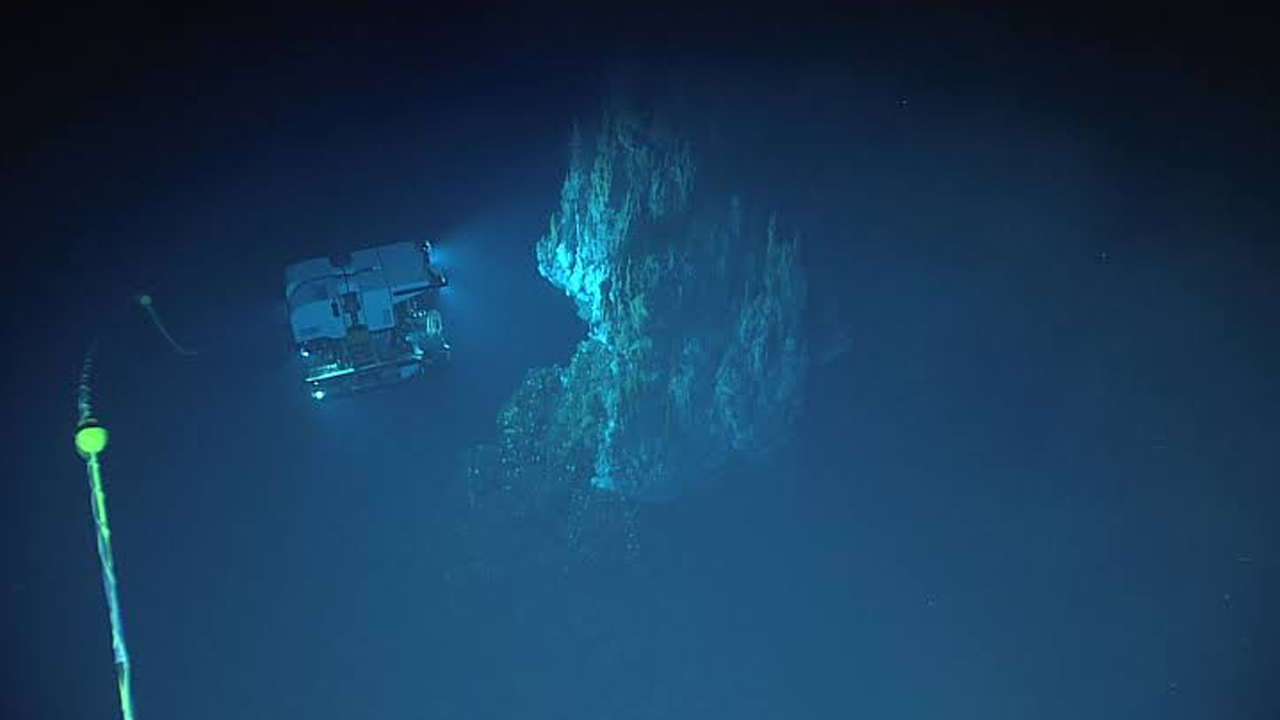
This happened at the Lost City Hydrothermal Field, an underwater zone that’s kind of famous for tall white carbonate towers, and for weird chemical behavior that just doesn’t look normal compared to most seafloor areas. The research team says the results could help explain how certain organisms can stay alive without any sunlight at all, and they might even point toward how life could exist on far off icy worlds, where the light is basically useless.
Scientists Discover 300°C Water Beneath Atlantic Ocean
During the International Ocean Discovery Program’s Expedition 399 in 2023 , researchers drilled down about 1.3 kilometers under the seafloor near the Atlantis Massif. They took water samples that had been locked inside older underground rocks, for a long time.
When the samples were checked, the water showed extremely low magnesium levels but a lot of calcium, plus other ingredients like lithium and strontium. The scientists think these chemistry shifts happened because seawater was mixing with deeper rocks over long periods, at temperatures that got close to 300°C.
Discovery Could Help Explain Life Without Sunlight
In the paper, published in Geochemistry, Geophysics, Geosystems, the team reports that the underground water’s chemical makeup matches pretty well with fluids coming from the Lost City hydrothermal chimneys.
They propose that these super hot fluids can generate hydrogen and methane, which then becomes energy for microorganisms living in total darkness. It’s possible the conditions feel somewhat similar to where Earth’s earliest life, the very first kinds, might have gotten started.
The results also open up questions about whether comparable chemical steps could be happening under the icy covers of moons such as Europa, or Enceladus from Saturn. Even there, beneath thick ice and no sunlight, processes like these could maybe still back biological survival.
Still, the researchers stress that more work is needed to prove the underground connection, but the discovery adds strong evidence that deep ocean environments might contain clues about how life begins, and about the chances for life beyond Earth.