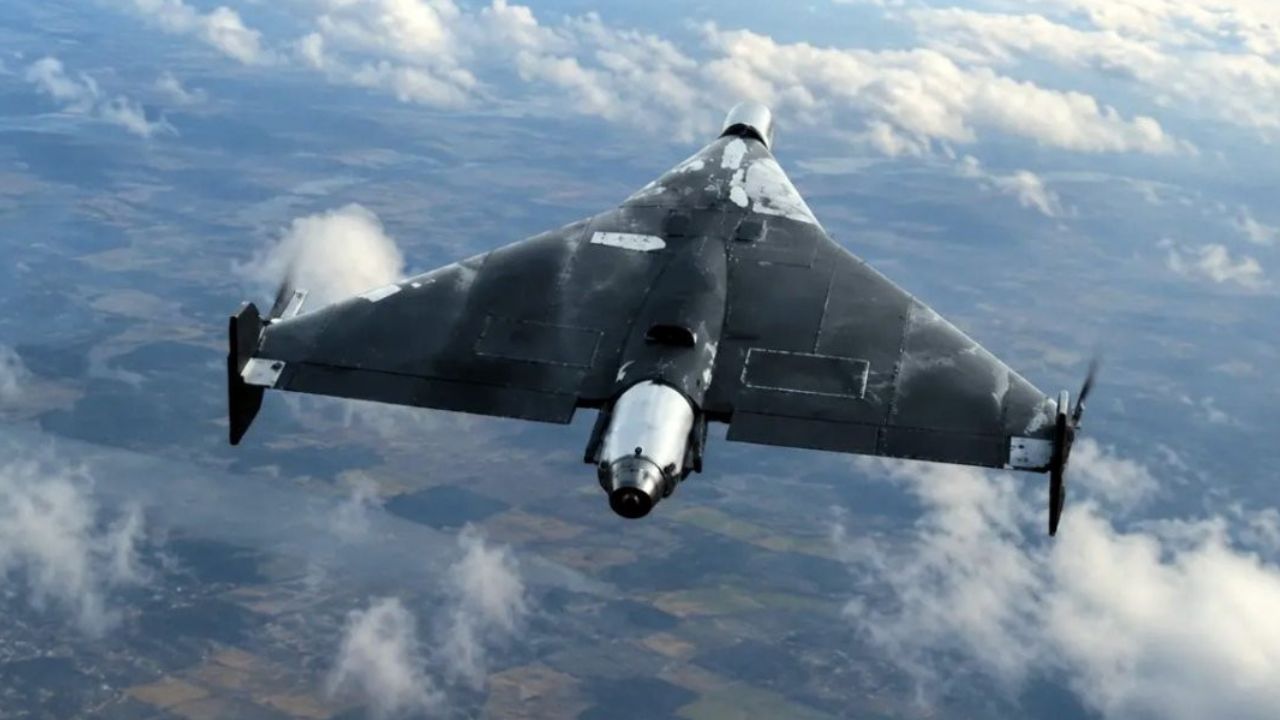
Russia’s latest jet-powered drone, the Geran-5, is creating new challenges for Ukraine’s air-defence systems. The drones have reportedly been used by Russia in the war since August and are faster and have a longer range than earlier versions.
According to a Ukrainian Air Force spokesperson, Ukrainian air-defence systems are able to intercept only around 60% of the Geran-5 drones. By comparison, Ukraine says it can stop up to 95% of some other types of Russian drones. The Geran-5 is reportedly capable of reaching speeds of around 600 km per hour and can strike targets up to 1,000 km away. It can also fly at an altitude of around 6,000 metres. These capabilities make it more difficult for some ground-based air-defence systems to intercept. Ukrainian officials say fighter aircraft may also be needed to target the drones.
The use of drones has changed significantly during the Russia-Ukraine war. In the early stages of the conflict, both sides relied heavily on fighter aircraft and other conventional weapons. As air-defence systems became stronger, long-range attacks became increasingly important.
Russia later expanded its use of glide bombs and attack drones. Earlier Geran-1 and Geran-2 drones were relatively slow and were largely based on the Iranian Shahed design. Russia subsequently introduced jet-powered variants, including the Geran-3 and Geran-4.
The newer Geran-5 represents another step towards faster and longer-range drone attacks. Ukraine is particularly concerned about these developments as it continues to face pressure on its air-defence resources and missile supplies. The growing use of faster drones is expected to remain a major challenge for Ukraine as both sides continue to develop new technologies and tactics during the war.