
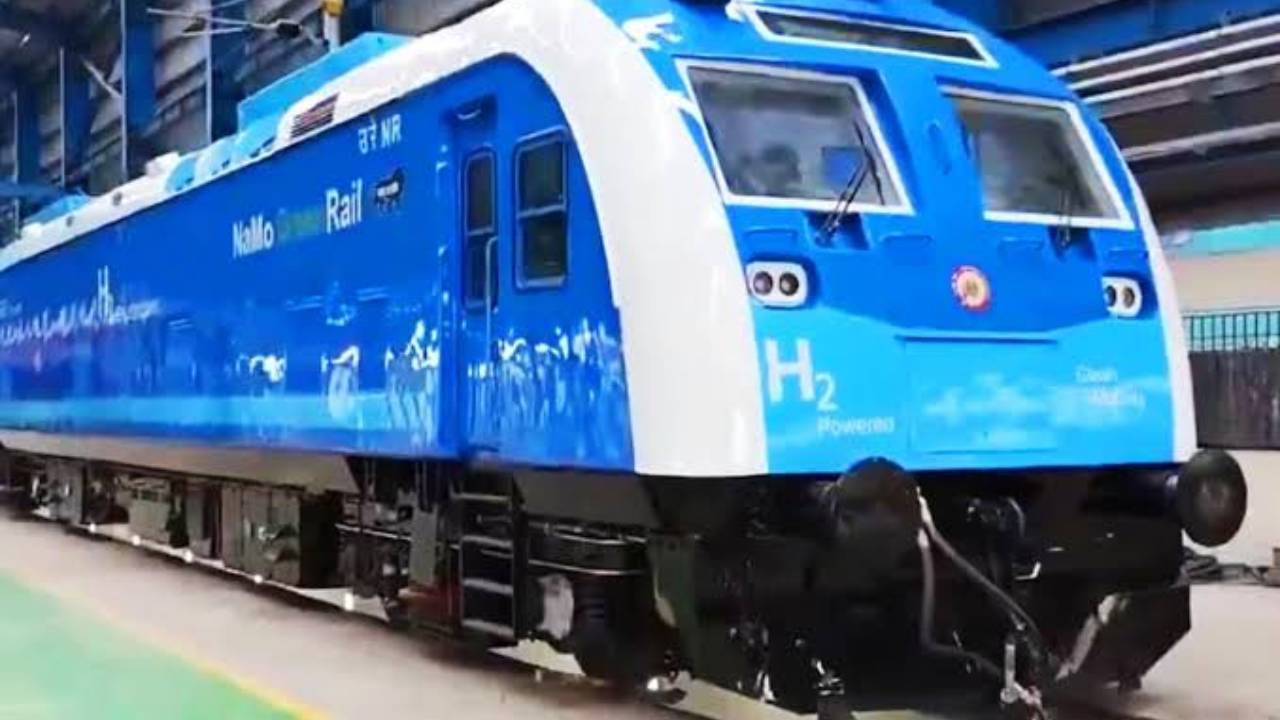
Prime Minister Narendra Modi flagged off India’s first hydrogen train on Friday. This train operates between Jind and Sonipat in Haryana. With this, India has joined the select group of nations possessing hydrogen technology; previously, only the USA, Germany, Japan, and China held this technology. Comprising 10 coaches, the train runs along an 89-kilometer route. Experts describe it as the longest and most powerful train of its kind in the world.
How does it work?
The train features two coaches dedicated to storing hydrogen cylinders, with the hydrogen gas kept in high-pressure tanks. A crucial component of the train is the 1200-kilowatt Proton Exchange Membrane Fuel Cell (PEMFC). It is here that a chemical reaction between hydrogen and oxygen generates electricity. The only by-products of this entire process are water vapor and heat, making it a source of clean energy completely free from carbon emissions.
Initially, hydrogen gas enters the PEMFC cell. With the aid of a platinum-based catalyst, hydrogen molecules split into protons and electrons. The electrons generate electricity. Simultaneously, oxygen from the ambient atmosphere enters the fuel cell. The hydrogen combines with protons and electrons to produce water vapor and heat. The electricity generated in this manner is stored in Lithium Iron Phosphate (LFP) batteries. This provides the engine with additional power and acceleration. When the train brakes, electricity generated by the “regenerative braking system” is stored back in the batteries.
Hydrogen Storage and Refueling Station Setup:
The country’s largest hydrogen storage and refueling station has been established in Jind, Haryana. It has a hydrogen storage capacity of approximately 3,000 kilograms. It was constructed in compliance with international safety standards NFPA-2 and ISO 19880.
Key Features of the Train:
The train consists of 10 units: two hydrogen power cars and eight coaches. It has a passenger capacity of approximately 2,600 people. Its maximum operating speed is 75 kmph, while its actual speed capability is 110 kmph. This train was developed by RDSO using entirely indigenous technology.