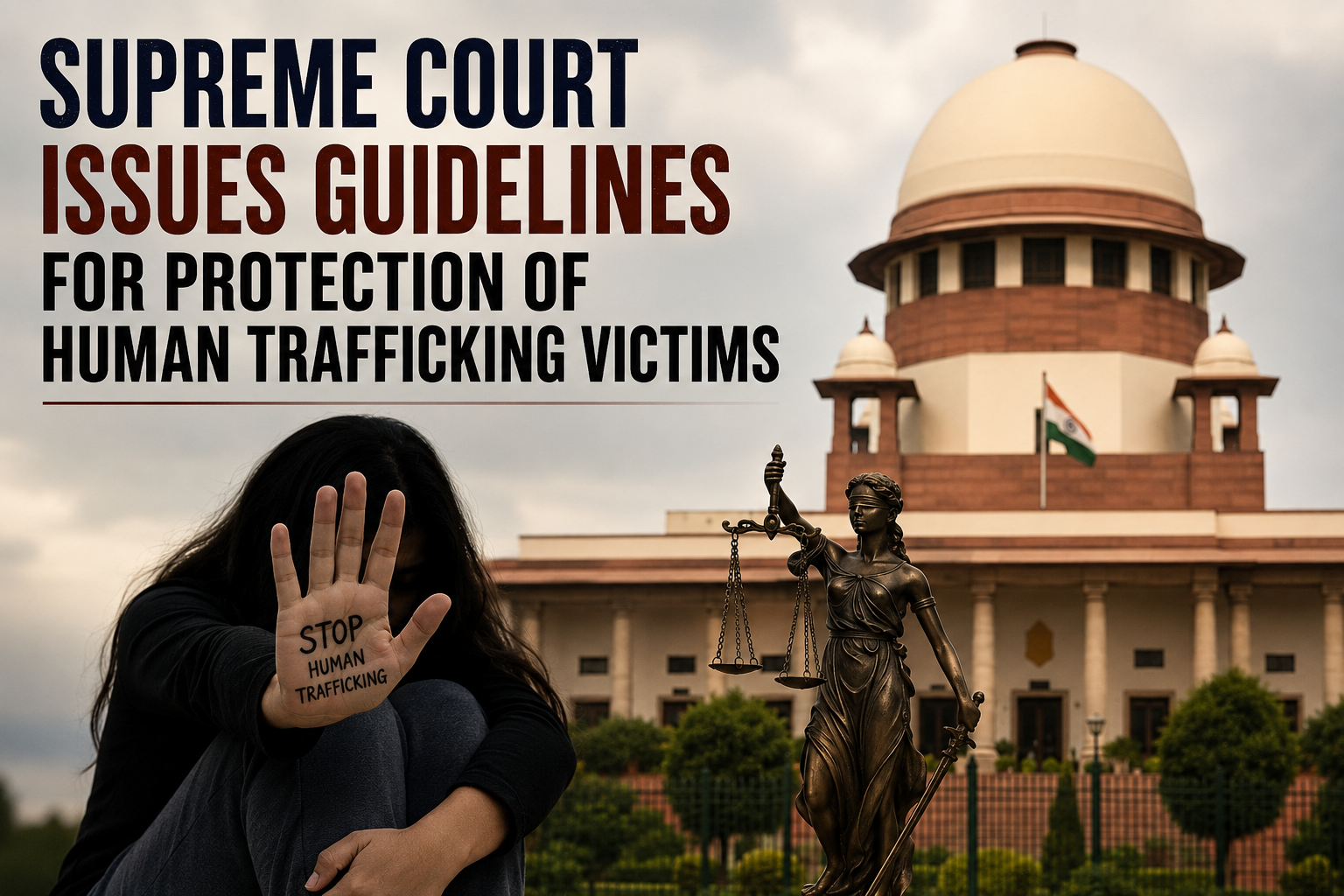
Human Trafficking Cases: Supreme Court has put out some fresh guidelines, for the protection of human trafficking victims, across India. The Court said these steps are meant to strengthen the rescue, and help with rehabilitation , but also to make sure survivors are treated with dignity. It also stressed that survivors should get proper support, not only during the legal steps but through the recovery stage as well.
What does human trafficking mean?
Human trafficking is basically the illegal buying, moving, and exploiting of people using force , trickery, or coercion. In many cases, victims are pushed into forced labour, sex exploitation, begging , domestic servitude, or even involvement in illegal work.
Women and children are widely seen as some of the most exposed groups , because trafficking networks often target them in particular ways.
Why did the Supreme Court step in ?
The Supreme Court noted that even after victims are rescued , many still deal with deep trauma, social stigma, and a serious shortage of sensitive support. The Court felt the system needs to be more empathetic and centered on the victim, so survivors can recover and rebuild their lives with less harm.
The new rules also focus on coordination, between police, state authorities and rehabilitation groups, so efforts don’t feel scattered.
Key guidelines the Supreme Court issued on Human Trafficking Cases:
1) Immediate rescue and protective care
Authorities are told to conduct quick rescue operations and arrange immediate protection for victims. Survivors should be shifted to safe shelters , and medical help should come first, without delay.
2) Privacy of victims, must be kept intact
The Court underlined that the identity and personal information of trafficking survivors should not be put in the public domain. The aim here is to protect victims from social stigma and also from possible retribution or renewed danger.
3) Counselling and mental health help
The guidelines mention psychological counselling and emotional support as a priority , especially for children and women who have faced abuse and trauma.
4) Legal assistance for survivors
Victims should receive proper legal aid, so they can understand their rights clearly, and take part in court processes without being threatened, or pressured.
5) Rehabilitation is not optional
The Court said rehabilitation matters just as much as rescue. Survivors are expected to get education, vocational training, and financial support, so they can stand on their own again.
6) Speedy investigation and trials
The Supreme Court also pushed for faster investigation and trial timelines in trafficking cases. It warned that delays in justice can worsen trauma, and can make victims less likely to come forward for help.
Why these guidelines matter
Many observers feel these new directions could improve how trafficking cases are handled in India. Even after rescue, survivors often struggle to live normally again, mainly due to fear, poverty, and the absence of stable support systems.
If rehabilitation efforts become stronger and more consistent, victims may be able to regain confidence and there may also be less risk of them being trafficked again.