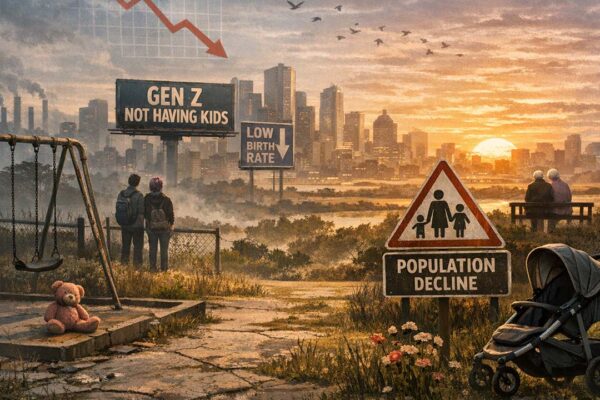
Gen Z Not Having Kids: Gen Z members all around the globe are choosing to postpone or skip parenthood which leads to lower birth rates throughout the world. The change shows more pronounced effects to observers who study historical patterns about how things developed during earlier periods.
Gen Z Are Not Having Kids
1900s: Women, on average, had 4–6 children in many parts of the world. Large families became expected practice because people needed more children to survive.
1950s–1970s: Birth rates started to decrease while women continued to have 3–4 children on average.
Today: Many countries experience fertility rate declines which result in rates between 1.5 to 2.0 and in some cases below 2.1 which marks the threshold for population equilibrium.
The steady decline demonstrates how people now view parenthood as an intentional decision rather than a standard practice.
Why Is This Happening?
Gen Z makes its choices because of three current social conditions:
High living expenses create financial barriers that prevent parents from raising their children.
Career priorities force people to delay their important life decisions.
Mental health awareness leads to questioning emotional readiness
People now believe that personal satisfaction in life can come from sources beyond relationships with family.
Gen Z believes in calculated decisions, and this is leading to many declines in various personal aspects.
Gen Z does not stop having children but they choose their ideal time to begin their families.
Future Impact:
The Old-Age Dependency Ratio (OADR) shows its major long-term effects when birth rates drop below replacement levels.
OADR is the metric counts the elderly population aged 65 and above in relation to the workforce age group between 15 and 64. The future workforce will see a decline because fewer newborns enter the world while the elderly population size continues to increase. At some point, the old age retired employees will be higher number than the young working individuals, by which there will be an imbalance.
Younger generations will face more financial burdens to aid pensions and benefits of retired employees.
Healthcare systems along with pension systems will experience more operational challenges
The economy will take longer to expand because the workforce will shrink in size
And eventually, the decline of fertility and birth rates leads to decline in population and if this continues, earth will see the end of Humans too by the end of 21st century.
Why This Needs Attention
Higher birth rates do not present the correct solution because people need better support to become parents. Policies and support systems like:
affordable housing
childcare support
better work-life balance
Better society accountability and low crime rate