
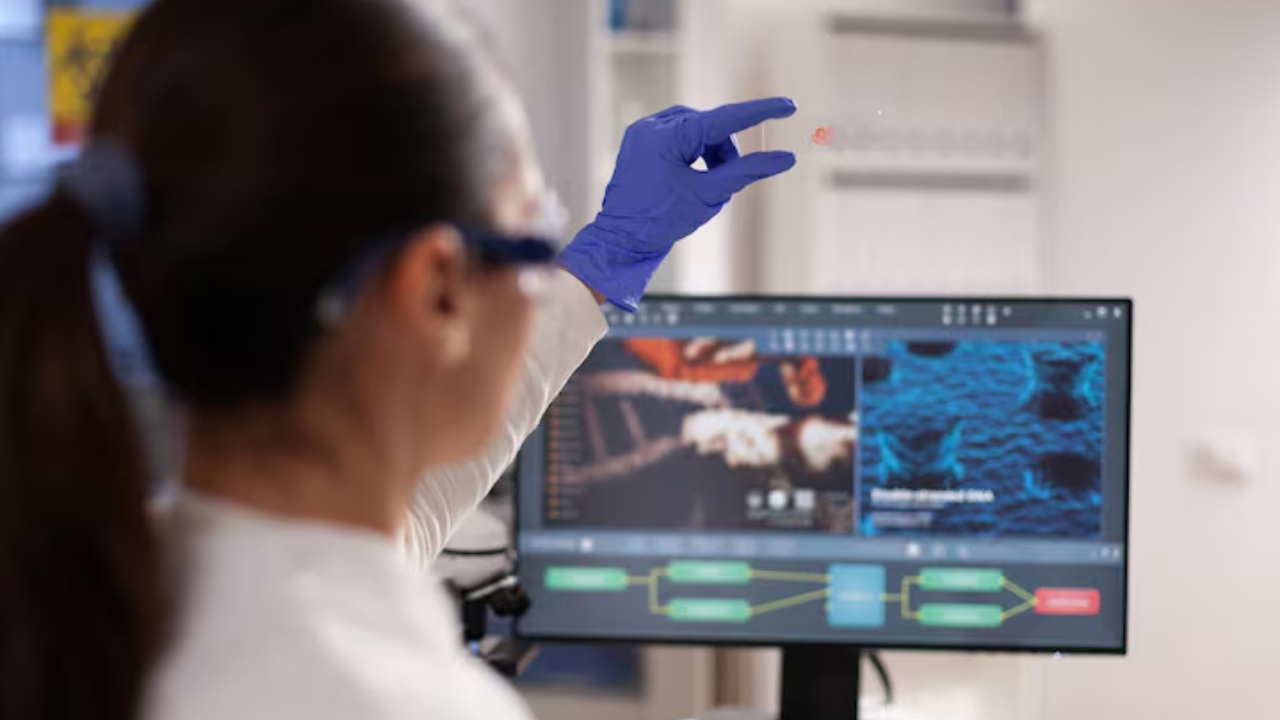
Cancer Detection Technology: A team of researchers at Westlake University developed this handheld cancer detection device, sort of a portable tool, able to spot early stage cancer biomarkers using just one small drop of blood, and it’s being called a major step toward screening that is quicker, less expensive, and more reachable in the future. According to the researchers it reached as much as 94.9% accuracy when identifying early-stage lung cancer biomarkers during clinical testing.
Scientists Make Cancer Detection Technology
They also say the tech could move advanced cancer diagnostics out of specialised laboratories and into clinics, rural health centres, and even home based monitoring kind of setups later on.
How The Handheld Cancer Detector Works
Normally, biomarker testing takes all kinds of costly lab systems, with optical gear, spectrometers, and specialised diagnostic equipment. That stuff is mostly only available in more advanced medical facilities. This new handheld system simplifies the entire thing in a big way.
As described in a research paper published in Nature Photonics, the device uses a light based sensing approach known as Q-modulated refractometric sensing. The idea is to help identify extremely tiny biological particles, the so-called small extracellular vesicles (sEVs), which can work as early indicators for lung cancer.
The compact diagnostic tool reportedly has just three main components, a 3D sensing chip, an LED light source, and a photodetector. On top of that, researchers used metamaterials and nanophotonic technology, to boost sensitivity while still keeping the overall device size manageable.
Clinical Trial Results Show Promising Accuracy
In trials using more than 170 serum samples from people with lung cancer, the handheld device showed strong results.
The study reported:
- Up to 94.9% accuracy for early lung cancer detection
- About 92.1% accuracy for post-surgical monitoring
- Nearly 10,000 times higher sensitivity than conventional ELISA testing
The researchers also mentioned the device can detect cancer biomarkers in roughly 15 minutes, so the process could be noticeably faster than a lot of standard lab based workflows.
Why The Technology Is Important
This project lands in the middle of rising interest in “liquid biopsy” technologies. Those methods aim to detect cancer related markers from blood tests instead of doing invasive tissue biopsies or surgeries.
Because portable diagnostic systems can travel, they might be especially useful in rural or underserved areas where access to specialised cancer screening is limited. And faster testing could support earlier diagnosis, which is often a key factor for better treatment outcomes.
Experts Say More Testing Is Still Needed
Even with the encouraging results, experts warn the device is still early stage. For hospitals or home healthcare use, the technology would still need bigger clinical trials, independent validation, regulatory approval, and longer term checks on performance.
Some researchers also caution that accuracy by itself doesn’t tell the whole story for screening. Other key clinical measures, including sensitivity, specificity, and false-negative rates, also need careful review before anything can be used broadly in real world medical settings.