
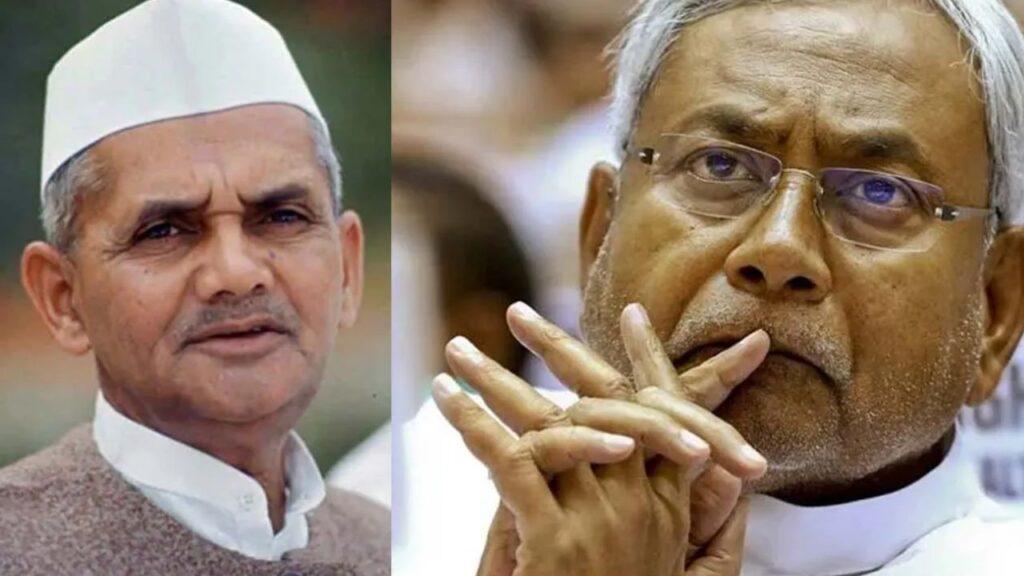
The NEET paper leak scandal shook the nation. Large-scale protests and demonstrations erupted in the national capital, Delhi; Jantar Mantar reverberated with agitation for nearly a month. The movement intensified following a police lathi-charge against students during the ‘Chalo Sansad’ (March to Parliament) protest on the opening day of the Parliament’s monsoon session. Consequently, Dharmendra Pradhan resigned from his post as Union Education Minister on Saturday. Notably, this is the first resignation since the formation of the Modi government. Throughout the country’s history, many have resigned from their positions, accepting moral responsibility for various mishaps. Dharmendra Pradhan’s resignation has brought to mind the resignations of those former Union Ministers.
Here are the key figures who resigned:
Lal Bahadur Shastri
The Ariyalur train accident in Tamil Nadu occurred on November 23, 1956, during the tenure of Lal Bahadur Shastri, who served as the Minister of Railways and Transport in Jawaharlal Nehru’s government. A passenger train plunged into a river after a bridge collapsed, resulting in the deaths of approximately 140 to 150 people. Although he bore no personal responsibility for the accident, Shastri resigned, believing the moral responsibility lay with him. He had previously considered resigning after another train accident, but Nehru had not accepted it; however, following the Ariyalur tragedy, his resignation was accepted.
T.T. Krishnamachari
The ‘Mundhra scandal’ came to light during his tenure as Finance Minister, involving the investment of LIC funds into companies owned by industrialist Haridas Mundhra. Feroze Gandhi raised the issue in Parliament, sparking severe criticism. Although there were no allegations of personal corruption, Krishnamachari resigned, accepting moral responsibility for the administrative failure within his department.
V.K. Krishna Menon
During the 1962 India-China war, V.K. Krishna Menon, the then Defence Minister, faced a barrage of criticism regarding the Indian Army’s lack of preparedness. Following India’s defeats in the war and amidst intense political pressure, Krishna Menon resigned from his ministerial post.
Nitish Kumar
On August 2, 1999, during Nitish Kumar’s tenure as Railway Minister in the Atal Bihari Vajpayee government, a collision between two trains near Gaisal in West Bengal claimed 280 lives. After it was determined that the accident was caused by failures in signaling and maintenance, Nitish Kumar resigned, accepting moral responsibility.
Shivraj Patil
Union Home Minister Shivraj Patil faced severe criticism following the terrorist attacks on Mumbai on November 26, 2008. He resigned from his post, accepting moral responsibility, after lapses in the intelligence system, coastal security, and emergency response were exposed. Vilasrao Deshmukh
Vilasrao Deshmukh, who was the Chief Minister of Maharashtra during the 26/11 Mumbai terror attacks, faced severe public backlash. He subsequently resigned from the post of Chief Minister, accepting moral responsibility.
Mamata Banerjee
In 2001, Mamata Banerjee, then the Railway Minister, decided to resign following a series of train accidents. However, the then Prime Minister Atal Bihari Vajpayee did not accept her resignation.
Suresh Prabhu
A series of train accidents occurred during the tenure of Suresh Prabhu, who assumed charge as Railway Minister in the Narendra Modi government in 2014. Consequently, in 2017, he offered to resign, accepting moral responsibility. However, Prime Minister Modi rejected his resignation. In a subsequent Union Cabinet reshuffle, the Railway portfolio was handed over to Piyush Goyal.
Dharmendra Pradhan
Most recently, Dharmendra Pradhan had to resign from the post of Union Education Minister following widespread protests by students over the NEET paper leak issue. He resigned from his ministerial post on Saturday. This marks the first time a Union Minister has resigned since the Modi government came to power. The issue has currently become a subject of intense debate, not only across the country but also internationally.