
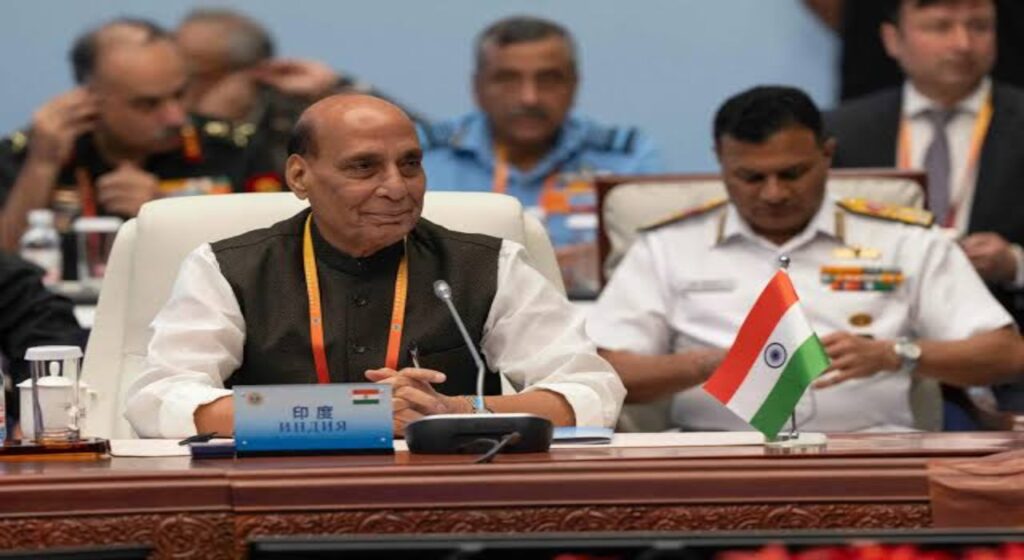
India has declined to support a joint declaration at the Shanghai Cooperation Organisation (SCO) Defence Ministers’ meeting, lead by Rajnath Singh, held in Qingdao, China. The decision followed India’s objection to the statement’s omission of a recent terror attack on civilians in Jammu and Kashmir.
During the meeting, Defence Minister Singh expressed strong concern over the 22 April attack in Pahalgam, where 26 people, including a Nepali tourist, were killed. Victims were reportedly targeted based on religious identity. The Resistance Front, believed to be connected to the banned group Lashkar-e-Taiba, later claimed responsibility. Officials noted the attack followed a familiar pattern seen in previous assaults by the group.
In response, India launched a major operation in early May, involving all three branches of its armed forces, aimed at dismantling cross-border militant infrastructure. The move heightened tensions in the region.
Singh reaffirmed India’s uncompromising stance on terrorism and urged SCO members to unequivocally condemn all such acts. However, the final SCO statement failed to mention the Pahalgam attack, focusing instead on general regional concerns. India viewed this as inadequate in light of recent events.
Due to these differences, the meeting ended without a unanimous joint statement. Singh’s visit also included discussions with Chinese defence officials, marking the first such high-level talks since the border tensions of recent years.
Singh later stated that India’s actions were a legitimate response to prevent future cross-border threats, especially when civilians are deliberately targeted. He called for accountability of those who organise, fund, or support terrorism, highlighting that safe havens for such activities would not be tolerated. India’s refusal to endorse the SCO declaration underscores its firm position following Operation Sindoor and its ongoing diplomatic outreach.