
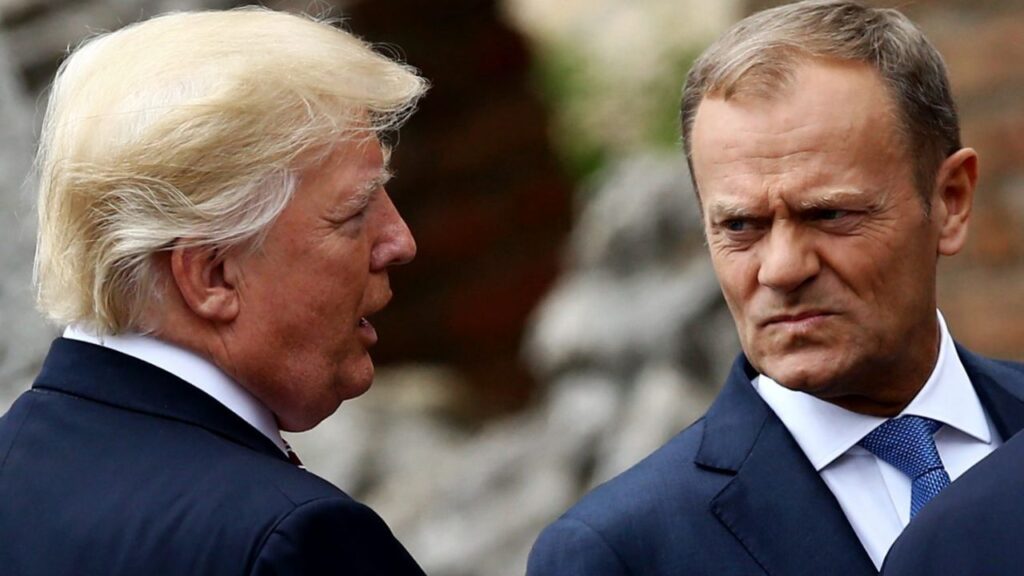
The tensions in the Middle East are rapidly changing the face of world politics. Allies who once blindly supported any US decision, now voice their opposition to US decisions. The fact that NATO countries are backing down to support the US, especially in the Iran issue, has become a topic of international discussion. US President Donald Trump hopes that NATO countries will stand by him during Iran-Israel tensions. But these key European countries refused to participate directly in the war. Expressing anger over this, Trump described NATO as a “paper tiger”. He lamented that European countries are relying on the US for their protection and only lend a helping hand when needed.
Will America come to save Europe?
The Prime Minister of Poland, Donald Tusk, reacted strongly to America’s behavior. In an interview given to ‘Financial Times‘, he questioned America’s credibility. On this occasion, he said.. Is America trustworthy? He asked. If Russia attacked, would the US come to the rescue of Europe under the NATO treaty? He openly expressed his suspicion. He called that the time has come for all the countries of Europe to form a strong defense alliance without relying entirely on America. He warned that Russia could attack any NATO member in the next few months. He criticized that even though Russian drones entered Polish airspace last year, NATO countries acted as if nothing had happened.
At the same time, the release of some internal emails of the US Department of Defense (Pentagon) is causing a stir. Through these emails, it seems that the Trump administration has discussed taking strict action against NATO countries that do not cooperate with the US in the Iran issue, and if necessary, suspending them from the alliance. Prime Minister Pedro Sanchez denied the news that Spain will be removed from NATO. However, analysts point out that the differences between America and NATO are clear. America’s priorities are changing, and On the other hand, due to the threat from Russia, anxiety started in European countries. The internal divisions within NATO are being discussed as a possible challenge to world peace.