
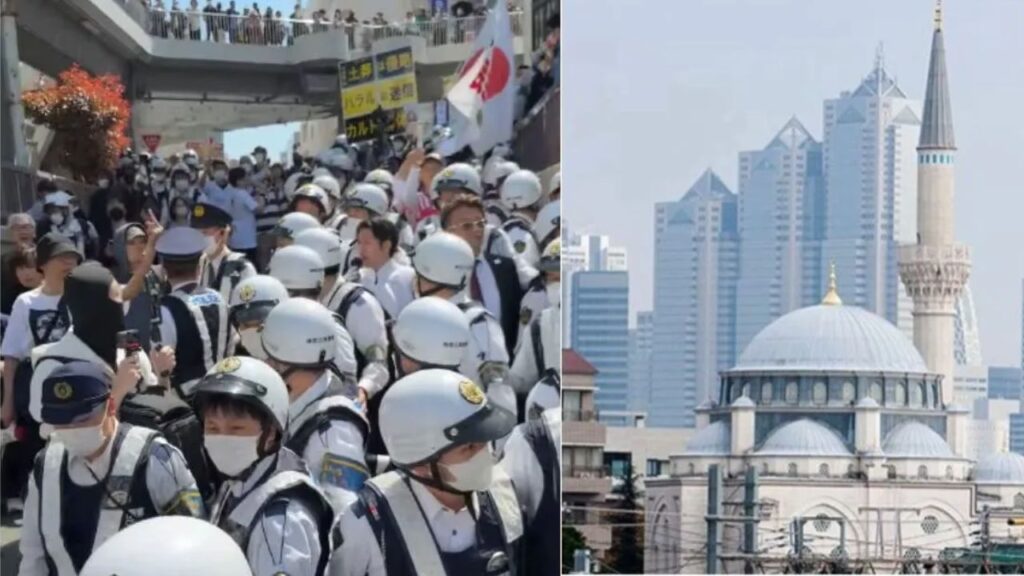
Japan is said to be a nickname for discipline and culture. Japan is a developed country in the world. However, in recent times, anti-Muslim ideology has been strongly heard there. In the past few years in that country, there has been a huge increase in the number of majids. In the beginning there were only four majids, but finally they reached 160. Especially during the recent general elections, things like ‘construction of mosques‘ and ‘establishment of graveyards’ became the main election agendas. Protests broke out in areas like Yokohama and Fujisawa near Tokyo to stop the construction of mosques.
It was fueled by a speech by an independent candidate outside Fujisawa Station on January 29. The propaganda that the construction of mosques will damage the cultural existence of Japan and threaten the safety of the local people is increasing insecurity among the Japanese people. It is said that the main reason for the concern of the Japanese people is that the Muslim population has increased dramatically within a decade. According to the 2010 census, the number of Muslims in Japan is only 1,10,000, and by 2024, expert Hirofumi Tanada has estimated that it will reach about 4,20,000. That means it has increased almost four times. While there were only 4 mosques in 1980, the number will reach 160 by 2025. The conversion of about 54,000 Japanese to Islam is also shocking to the locals.
Sana Takaichi, who was elected as the first female Prime Minister in the history of Japan, and her party’s right-wing policies are further influencing this situation. Takaichi effectively exploited public opposition to the growing foreign population in Japan. In January, her government took a decision to tighten the rules on citizenship and permanent residence (PR). Strict action has been taken against the foreigners who have arrears. Thousands of complaints about the proposal to provide ‘Halal food’ in schools, the desire to preserve Japan’s original culture intensified among the Japanese. Despite Japan’s need for foreign workers due to its declining birth rate, Japanese fear that the growing foreign population is changing their culture. The people there believe that the increase in the number of immigrants coming from countries like Indonesia, Pakistan and Bangladesh and the construction of mosques is leading to a geographical change. This ‘cultural clash‘ now rules Japanese politics.