
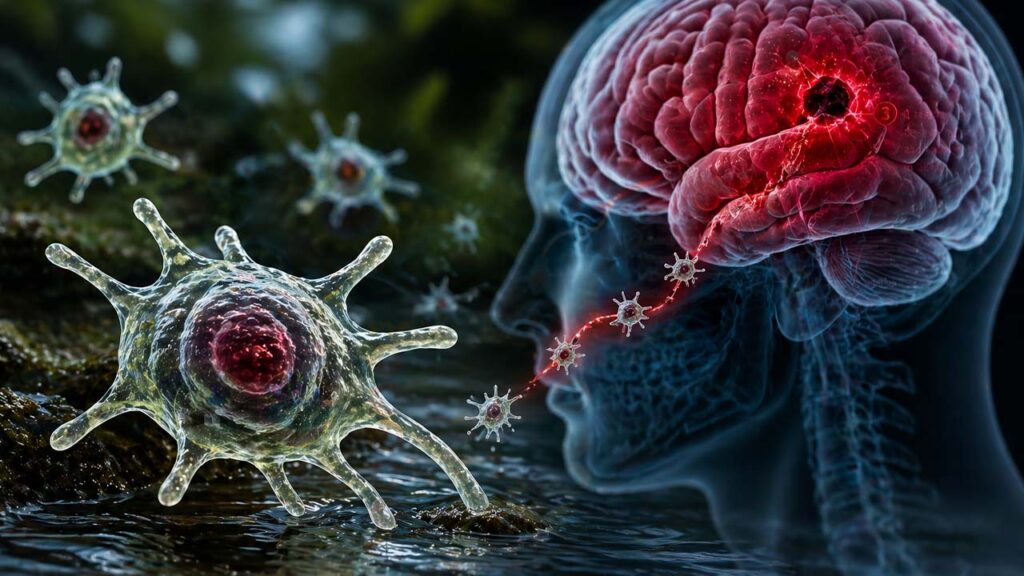
Brain-Eating Amoeba PAM Cases: The state of Kerala has declared a public health emergency because of increased reports about a rare yet fatal outbreak of “brain-eating amoeba” disease. The health minister and other health officials from the state have issued a public safety warning which requires people to maintain their protective measures because summer brings higher infection danger.
Brain-Eating Amoeba PAM Cases Spark Alert
What Is the Brain-Eating Amoeba?
Naegleria fowleri is the microorganism that causes the infection which exists in warm freshwater sources like lakes ponds and badly kept swimming pools. The infection leads to Primary Amoebic Meningoencephalitis (PAM) which results in a severe brain infection that affects the central nervous system.
PAM occurs infrequently yet it proves to be highly lethal because most infected individuals die at a rate above 95 percent.
How Does It Spread?
The amoeba enters the body through the nose as people swim or dive in water that contains contamination. The amoeba proceeds to the brain where it causes inflammation and fast brain destruction. The infection spreads through contaminated water yet it does not transmit from one human to another.
The medical research indicates that people in Kerala face their greatest health risks when they come into contact with water sources that do not receive treatment or that contain standing water.
Symptoms to Watch Out For
Early symptoms can appear within a few days of exposure and may include:
High fever
Severe headache
Nausea and vomiting
Stiff neck
Sensitivity to light
Confusion or seizures
The medical condition worsens through its development until it reaches a critical stage which can endanger life within a few days if urgent treatment does not occur.
How to Stay Safe
Health experts have shared simple but crucial precautions to reduce the risk of infection
Avoid swimming in warm, stagnant freshwater bodies, especially if they are untreated.
Use nose clips or keep your nose closed while entering water.
Do not use untreated tap water for nasal rinsing; use boiled or distilled water instead.
Ensure swimming pools are properly chlorinated.
Seek immediate medical help if symptoms appear after water exposure.