
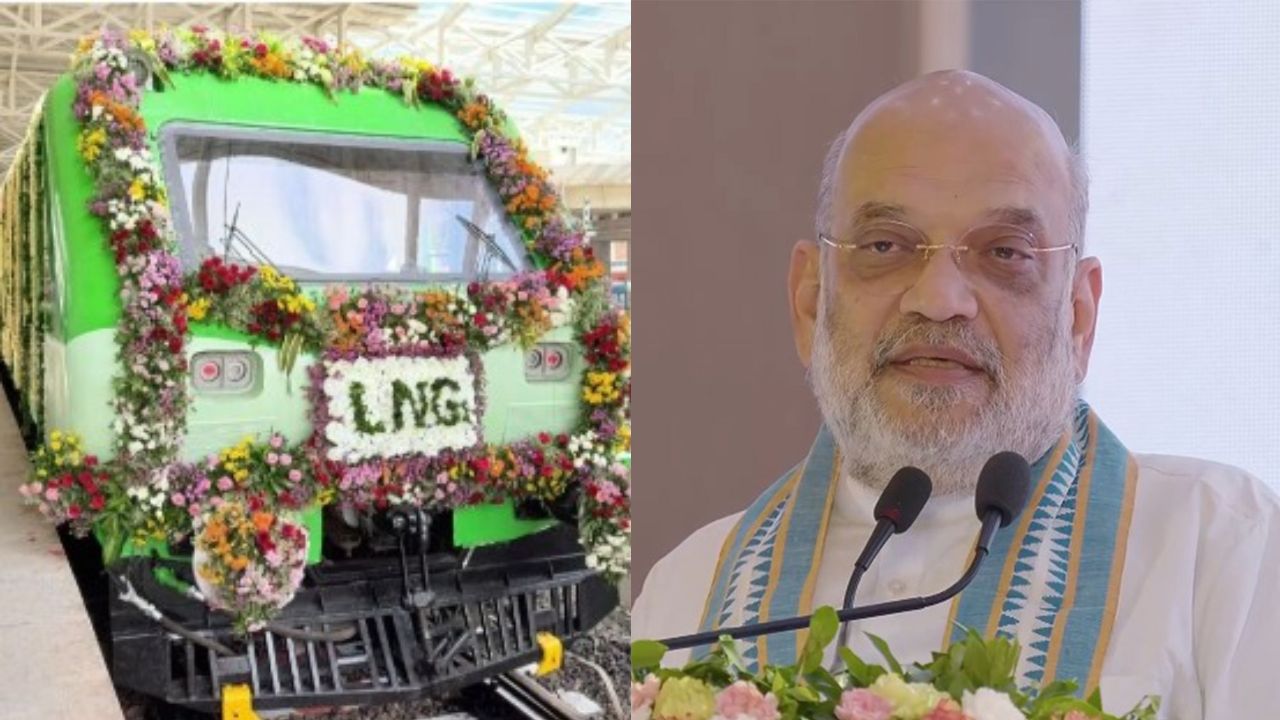
Union Home Minister Amit Shah said the Indian Railways has undergone major changes in recent years, with new technology and modern infrastructure being introduced across the network.
Shah flagged off India’s first LNG-powered train at Sabarmati Railway Station in Gujarat. The new train can operate using both liquefied natural gas (LNG) and diesel. According to the government, the technology is aimed at reducing diesel consumption, fuel costs and emissions. The train is expected to replace around 40% of its diesel use with LNG.
Addressing the gathering, Shah said several major railway projects had been introduced since 2014, including dedicated freight corridors, rapid rail services and modern railway stations. He also highlighted the development of hydrogen-powered train technology and the successful trial of a long double-stack container train between Mumbai and Vadodara.
He added Indian Railways consumed around 293 crore litres of diesel in 2015-16. This had fallen to about 108 crore litres by 2024-25, according to the figures he cited. He said the government aims to bring diesel consumption down to zero by 2030.
Home minister also highlighted the expansion of railway electrification. According to Shah, only around 75 km of railway lines were electrified annually in 2010-11. By 2023-24, the figure had increased to 7,188 km a year, with 99.6% of the railway network now electrified.
During his speech, Shah also criticised the Congress over its record in government and challenged the opposition to debate on the basis of facts and figures. The new LNG train is part of efforts to reduce dependence on diesel and move Indian Railways towards cleaner and more efficient fuel options.