
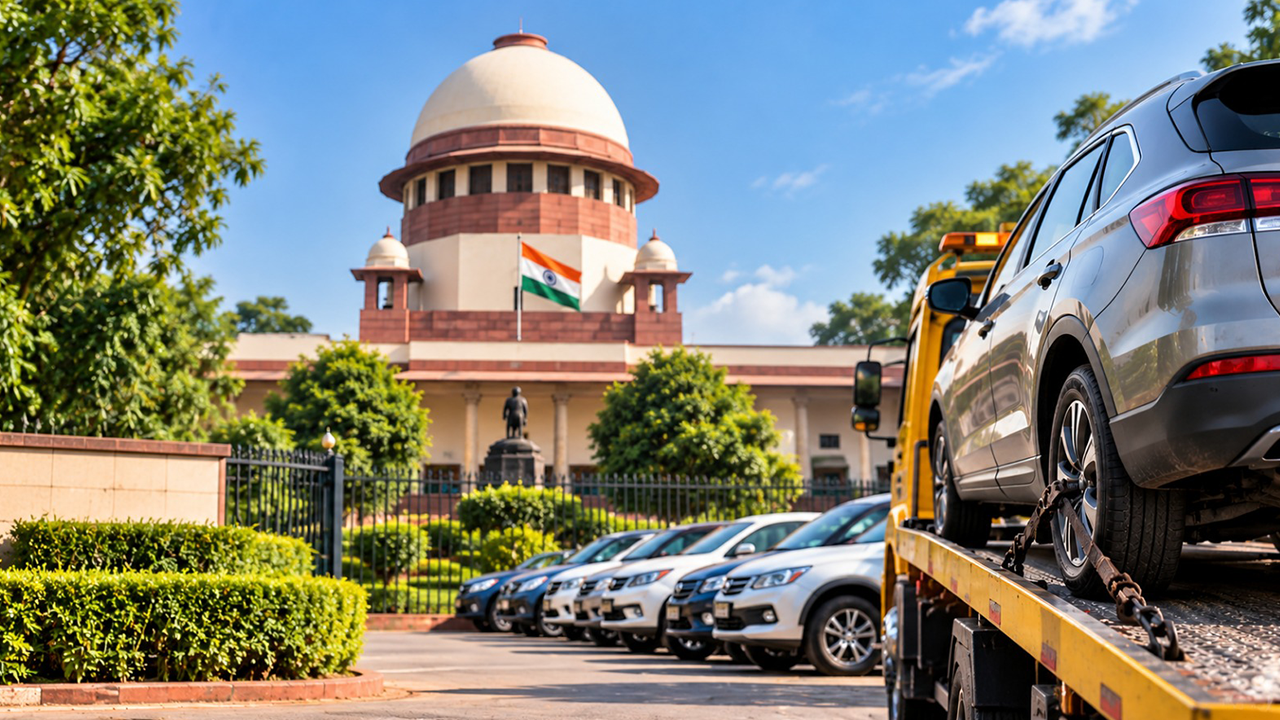
The Supreme Court has ruled that the banks and non-banking financial companies (NBFC) cannot forcibly take back or seize vehicles from the defaulters of its loan. While the lenders have the right to repossess the financed vehicle, the process needs to be carried according to the law and the provisions.
Supreme Court Rules On Vehicle Seizure
A Bench of Justices P S Narasimha and Alok Aradhe said a lender’s right to repossess a vehicle does not include the unlimited right to use force, stealth and intimidation.
They said the exercise of the recovery has to be made by adopting lawful means and following the loan agreement and the Reserve Bank of India (RBI) guidelines.
Case involves a truck owner
The Supreme Court verdict came after hearing a dispute over the seizure of a truck from a borrower. A buyer had availed a loan from Cholamandalam Investment and Finance Company for a commercial vehicle which was repossessed as the payment was defaulted by the borrower and later sold by the company.
The buyer argued that the vehicle should not have been seized without prior notice.
The Supreme Court observed that the method used by the company was not in line with the RBI directions and held the recovery agent responsible as they did not follow the necessary safeguard.
RBI asked to ensure compliance
The Supreme Court also asked the RBI to take measures to ensure that the banks and NBFCs comply with the directions while carrying out the recovery of the vehicle. It said the guidelines of the RBI disallow the banks to harass, intimidate and use any force while attempting to recover the vehicle.
Compensation to borrower
The court ordered the finance company to close the loan accounts, pay back ₹4.5 lakh with 6% interest per annum on the amount received by them as the proceeds from the sale of the truck and a compensation of ₹10 lakh for the mental agony and loss of livelihood.
What borrowers must know
While defaulting on a loan payment, the borrower can be subjected to the legal remedies of the bank or NBFC to recover the dues. But the Supreme Court verdict indicates that the borrowers are entitled to notice and a legal recovery process on repossession of the vehicle.